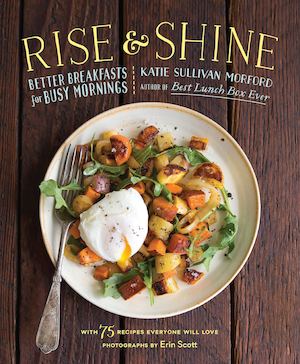
Rise And Shine_HC
twenty poems 9-18-12 pass.indd 20 9/19/12 2:58 PM
Rise SHINE Rise and Shine-3-21-16.indd 1 3/21/16 3:48 PM
Rise and Shine-3-21-16.indd 2 3/21/16 3:48 PM
Roost Books Boulder 2016 Katie Sullivan Morford photographs by erin scott Rise and Shine-3-21-16.indd 3 3/21/16 3:48 PM
Rise and Shine-3-21-16.indd 4 3/21/16 3:48 PM
TO JOE, ISABELLE, ROSIE & VIRGINIA MY FOUR BEST REASONS TO RISE AND SHINE Rise and Shine-3-21-16.indd 5 3/21/16 3:48 PM
vi Introduction 1 1. WHY MORNING MATTERS | 3 2. MAKING IT HAPPEN | 19 3. SMOOTHIES AND DRINKS | 27 Strawberries and Cream Spoon Smoothie 30 Blueberry Superfood Smoothie 33 A Green Smoothie (Even Kids Will Love) 34 Orange Almond Date Lassi 37 Citrus Coconut Water Cooler 38 Milk and Honey Latte 39 Almost Instant Chocolate Breakfast Drink 41 4. EVERYDAY EGGS | 43 Egg-in-a-Nest Pesto Pizza 45 Perfect Soft-Cooked Eggs with Buttered Soldiers 46 Greens and Whole Grains Scramble 49 Weekday Huevos 50 Muffin Tin Baked Eggs 52 Rise and Shine-3-21-16.indd 6 3/21/16 3:48 PM
contents vii One-Eyed Jack in a Bagel 54 Veggie Scramble Pita Pockets 56 Make-Ahead Mini Spinach Frittatas 58 Pimento and Cheddar Egg Pie 60 Sweet Egg Crepe with Cherry Jam and Crème Fraîche 62 5. GRANOLA, OATS, AND BREAKFAST GRAINS | 65 My Girls’ Granola 66 Apricot Ginger Cluster Granola 69 Dark Chocolate Raspberry Muesli 71 Good Morning Trail Mix 73 Savory Overnight Oats 75 “Better Than Boxed” Instant Oatmeal 77 Ham and Cheese Breakfast Polenta 80 Quinoa Bowl with Fall Fruits 82 Slow Cooker Coconut Rice Pudding 84 Morning Fried Rice 86 6. YOGURT AND FRUIT | 89 “Get Up and Go” Yogurt Cups 90 Raspberry Chia Yogurt Pops 92 Rise and Shine-3-21-16.indd 7 3/21/16 3:48 PM
contents viii Honey Stewed Summer Fruit 94 Pretty Pomegranate Sundaes 97 Savory Yogurt Bowls 99 Breakfast Baked Apples 100 7. SANDWICHES AND WRAPS | 103 Drive-Through Egg Sandwich 104 Good Morning BLT 107 Oozy Pear and Gruyère Panini 109 Peanut Butter Raspberry Waffle Iron Sandwich 111 French Kids’ Breakfast Baguette 112 Strawberry Ricotta Tea Sandwich 115 Nutty Banana Bites 116 Tex Mex Tofu Wraps 118 Cheesy Greens Quesadilla 120 Freezer-Friendly Breakfast Burritos 122 8. TOAST | 125 “Eat Your Veggies” Tartine 126 Egg and Avocado Smash 128 Layered Lox Toast 129 Turkish Toast 131 Cottage Cheese, Olive Oil, and Black Pepper Tartine 132 Waldorf Toast 135 Teddy Bear Toast 136 Granola Apple Stacks 139 9. PANCAKES, WAFFLES, AND FRENCH TOAST | 141 Rise and Shine Pancake Mix 142 Barely Banana Protein Pancakes (with 4 Little Ingredients) 145 Rise and Shine-3-21-16.indd 8 3/21/16 3:48 PM
contents ix One-Bowl Chile Cheese Cornmeal Pancakes 147 Make-and-Freeze Buttermilk Waffles 150 Strawberry Waffle Sandwich 153 Weekday Waffle Iron French Toast 154 Slow Cooker Cinnamon French Toast 156 10. MAKE-AHEAD MUFFINS, BREADS, AND BARS | 159 Lemon Blueberry Polenta Muffins 160 Double Pumpkin Pie Muffins 162 Good Morning Sunshine Muffins 165 Banana Chocolate Chip Millet Bread (for Slow Cooker or Oven) 168 No-Knead Brown Bread 171 Cheesy Zucchini and Olive Bread 174 Birdseed Bars 177 Milk and Cereal Bars 179 Baked Applesauce Molasses Donuts 182 11. WEEKEND FAVORITES | 185 Grapefruit Brûlée with Mint and Crème Fraîche 186 A Little Fruit Salad 187 Blackberry Orange Puffy Pancake 188 Buckwheat Blender Crepes 191 3-Ingredient Apple Butter Toaster Tarts 194 Big Joe’s Huevos Rancheros 196 Roasted Roots Hash with Poached Eggs 199 Farmers’ Market Salad with Warm and Crispy Goat Cheese 202 Acknowledgments 204 Resources 206 Index 207 Rise and Shine-3-21-16.indd 9 3/21/16 3:48 PM
rise and shine x Rise and Shine-3-21-16.indd 10 3/21/16 3:48 PM
1 since my kids were tiny,I’ve begun many mornings with a little ritual that involves poking my head into their bedrooms and whispering, “Rise and shine . . . ,” just loud enough to wake them from their sleep. It’s exactly how my own mom roused my siblings and me when we were growing up, a practice that starts the day off on a note hopeful enough to coax children from the comfort of warm beds. But this gentle waking is often (usually?) followed by chaos. So much needs to hap- pen between sleep and the start of the school day. There are showers to take, beds to make, outfits to choose, shoes to tie, backpacks to fill, lunches to pack, and teeth to brush. And this is just the practical side of the story. It doesn’t even take into account the child who won’t get up, the one who must be prodded along every step of the rou- tine, the one having a bad hair day or a “wrong side of the bed” day. And then there is all that needs to happen for parents, some of whom have been up half the night with a baby or working into the wee hours for a boss who doesn’t care that they have a family to get out the door. As a result, what should be the priority of the morning—breakfast—becomes an after- thought. The meal we all hear is the most important of the day, especially for kids, be- comes a “flying by the seat of our pants” postscript. It’s reduced to shoveling in a few bites of Cheerios while pulling on winter coats, scarfing down a cereal bar en route to the bus, sometimes, or eating nothing at all. This book is the answer to every parent who has struggled to get breakfast on the table—and to get their child to actually eat it. It comes from my personal experience Rise and Shine-3-21-16.indd 1 3/21/16 3:48 PM
rise and shine 2 in making family meals for the past seventeen years, a job I’ve managed without relying heavily on the beguiling lineup of supermarket convenience foods. Inside this book you’ll find recipes for seventy-five breakfast favorites, most of which are entry-level easy, with a generous number requiring no more than five to ten minutes of hands-on time. You’ll also discover many dishes that can be made ahead, so the only requirement for eating breakfast in the morning is, well, to eat breakfast. The recipes draw on my expertise as both a registered dietitian and a culinary professional, which means they balance good nutrition with good taste. Every last one was rigorously vetted by my own team of in-house critics—otherwise known as my children—and then tested by a small army of parent and teen recipe testers. In the process of writing this book, nearly everyone I spoke to responded the same way: with an enthusiastic “I LOOOOVE breakfast.” Yet, many of these same folks confessed that breakfast often gets the shaft. This book intends to change that. It honors our passion for the first meal of the day by arming you with recipes and inspiration for those 260 week- day mornings a year that can make or break a healthful diet. The aim, ultimately, is to give you and your kids something to really “rise and shine” about. Breakfast! Rise and Shine-3-21-16.indd 2 3/21/16 3:48 PM
3 1 whether or not breakfast trulyis the most important meal of the day is up for debate. I’d argue that all meals matter because, collectively, they form the balance of our diet: the good, the bad, and the ugly. What’s unique about breakfast, though, is that by the time morning arrives, most of us have been without a bite to eat for somewhere in the neighborhood of twelve hours. It makes sense that our bodies need refueling, particularly children, who have smaller tanks that need to be topped off regularly. There is plenty of research demonstrating the upside of getting breakfast under your belt, particularly where kids are concerned. Studies have found that children and teens who take in a morning meal tend to do better in school through improved memory, abil- ity to concentrate, and better test grades. Kids also benefit socially, due to improved mood and better social interactions with teachers and classmates. In addition, eating breakfast is linked with lower body weight and less weight gain over time. Among chil- dren and adolescents, breakfast eaters have been shown to be less likely to be over- weight, while breakfast skippers are at higher risk for being overweight or obese. Let’s not forget something a little less measurable but no less important: breakfast is an opportunity for family time—to sit across the table from one another over a bowl of oatmeal or to stand at the stove together and scramble a pan of eggs. Between busy school and work schedules, the morning may be the only quality time your family has all day. So yes, breakfast does matter, but here’s the rub: not all meals are created equal. Rise and Shine-3-21-16.indd 3 3/21/16 3:48 PM
rise and shine 4 WHAT MAKES A GOOD BREAKFAST? Great question. What, really, does a balanced breakfast look like? Recently, a group of nutrition experts gathered research and put their heads together to decide just that. In a nutshell, they concluded that breakfast should: Make up 15 to 25 percent of daily calories from a combination of carbohydrates, protein, and healthy fats. Feature sensible portions based on age, gender, and daily energy needs. Make a generous dent in our daily nutrient requirements, with a goal of at least 20 percent for as many nutrients as possible. Emphasize nutrient-dense foods—that is, foods that pack in a lot of nutrition for the amount of calories delivered. Ideally, be made up of at least three of the food groups—that is, grains, fruits, vegetables, protein foods, and dairy foods. I appreciate the data, but when it comes to feeding my family, I think less about cal- ories, percentages, and grams of fat and more about the food itself, focusing on those three (or more) food groups we’re aiming for. I figure, if we fill our plates with a variety of whole foods, eat when we’re hungry, and stop when we’ve had enough, the rest will usu- ally take care of itself. With that in mind, here’s what I focus on, nutrition-wise, when it comes to setting the breakfast table. MORE FRUITS AND VEGETABLES Most of us fall well short of eating enough fruits and vegetables, kids included. Me in- cluded. Consider the fact that the USDA recommends half of our plates be filled with them. Realistically, how often does that happen? To come within striking distance, we can’t overlook the chance breakfast gives us to add something from the produce aisle, whether it’s adding leftover broccoli to scrambled eggs or topping cold cereal with raspberries. When it comes to picking your produce, variety counts too. Aim to eat Rise and Shine-3-21-16.indd 4 3/21/16 3:48 PM
why morning matters 5 with the seasons so that over the course of the calendar year, you’ve packed your plate with the full rainbow. And don’t discount the freezer section of the market, because nutritionally, frozen fruits and vegetables stack up well against fresh, and they can be handy, particularly between seasons when choices aren’t so abundant. As for organics, choose pesticide-free produce if you can swing it. That said, what matters, first and foremost, is getting in plenty of fruits and vegetables. If the economics of buying or- ganic is a barrier, put your organic food dollars toward what has become known as the "dirty dozen"—produce known to have the highest pesticide residues: the dirty dozen 1. Apples 2. Peaches 3. Nectarines 4. Strawberries 5. Grapes 6. Celery 7. Spinach 8. Bell peppers 9. Cucumbers 10. Cherry tomatoes 11. Imported snap peas 12.Potatoes (Source: Environmental Working Group) LESS RELIANCE ON PACKAGED FOOD Let’s be honest: I’m not at home bottling milk from backyard goats or grinding grains for home-baked bread. I’m a busy mom, and just like most other parents, I include con- venience foods in my shopping cart. That said, I aim for fewer packaged goods and with fewer ingredients, avoiding what’s artificial, super-sugary, or hyperprocessed. If I can pull together a breakfast that’s mostly homemade, it ups the likelihood that it will also be nourishing, delicious, and, most important, eaten. It also means I get to choose the ingredients that go into my food, which results in less environmental waste through less packaging. CARBOHYDRATES THAT COUNT Carbs are bad, right? That may be what the latest diet book or skinniest celebrity would have you believe, but carbohydrate-rich foods are in fact very good and an important part of a balanced diet. What’s confusing is that carbohydrates show up in everything from squishy white bread and “sugar cereal” to quinoa and whole grain farro. Same nutrient, Rise and Shine-3-21-16.indd 5 3/21/16 3:48 PM
rise and shine 6 different package. The key is to reach for less-processed carbohydrate-rich foods, such as whole grain rye bread, steel-cut oatmeal, rolled oats, corn tortillas, polenta, brown rice, and barley, to name just a few. These are slow-release carbs, meaning they provide more sustained energy than heavily processed ones. This is something that’s particularly important at breakfast, when we need quick energy (which all carbohydrates provide) but don’t want to bottom out an hour into the morning. In our house, it’s not all whole grains all the time, but I do my best to stock more quality carbs than not. If brown rice and whole wheat bread aren’t part of your repertoire, don’t fret. Shifting to a more whole grain focus doesn’t need to happen overnight; it can occur organically and gradually over time. Baby steps. PLENTY OF PROTEIN It can be easy to let breakfast pass us by without getting protein in there. I myself am a reformed toast-for-breakfast eater and have had more than a few meals of cold cereal in a cup, hold the milk. The missing piece, among other nutrients, was protein—the smear of nut butter on bread or the cold milk over cereal. Protein has the potential to help steady our blood sugar, deliver key nutrients, and keep us satiated in a way that carbo- hydrates alone do not. Breakfast-friendly protein sources are many, including eggs, yo- gurt, milk, soy milk, kefir, cottage cheese and other cheeses, tofu, nuts, seeds, nut butter and peanut butter, beans, smoked fish, and ham. It’s not hard to work these foods into breakfast, from topping oatmeal with chopped nuts to downing a glass of milk alongside a slice of homemade banana bread. AN EYE ON CALCIUM Many of us (most notably, adolescent girls) are falling short of getting enough calcium in our diet. This mineral, along with its “helper” nutrient, vitamin D, is essential for healthy bones, and I can think of no better meal in which to up your intake than break- fast. Milk and yogurt are morning staples. And if you can’t do dairy, most plant-based milks are fortified with just as much calcium as cow’s milk, and sometimes more. Other calcium sources for breakfast include cheese, calcium-fortified soy milk, kefir, almonds Rise and Shine-3-21-16.indd 6 3/21/16 3:48 PM
why morning matters 7 and almond butter, blackstrap molasses, tahini, calcium-fortified cereals, tofu (made with calcium-sulfate), and dark leafy greens, such as kale and collards. AN EMPHASIS ON HEALTHY FATS It wasn’t long ago that we all seemed to be terrified of dietary fat. Egg-white omelets and fat-free cookies were very much in vogue. The thinking has shifted, though, as we now rec- ognize the importance of fat in health and disease prevention. From a practical standpoint, fat can play a role in staving off hunger because it takes longer to digest than other nu- trients. Translation: Top half of a bagel with sliced avocado, and it may sustain you better than a whole bagel, for about the same number of calories. The key is to aim for foods rich in healthier fats—olive oil, nuts, seeds, nut butter, salmon, and avocado—and put less em- phasis on foods high in unhealthy fats—sausage, fatty cuts of beef and pork, palm oil, and large amounts of cheese. Foods high in omega-3 fats, such as salmon, sardines, walnuts, and flaxseeds, earn bonus points because they’re linked to a whole host of health benefits. EASY ON THE OJ How orange juice became the official drink of the American breakfast is a complicated tale that has more to do with good marketing than good nutrition, as far as I can gather. Truth? I’m not a big fan. Are there bigger fish to fry than ousting the simple glass of OJ? Sure. And do I occasionally include it on our breakfast table? Yes. But for most meals, I’d rather have everyone fill up on whole fruit than juice. The natural sugar and calories in juice are more concentrated than in fruit. Plus, juice lacks whole fruit’s fiber, which is so important for healthy digestion, among other benefits. For hydrating kids in the morning, I recommend good old-fashioned water, milk, or if you want to get fancy, herbal tea. If drinking your morning orange juice is nonnegotiable, stock up on small juice glasses and aim to limit your portion to four ounces or so. LESS SWEET STUFF Sweetness appears to be the resounding theme in much of what we traditionally think of as breakfast food. It’s our early-morning crutch. Consider how big a role added sugar plays Rise and Shine-3-21-16.indd 7 3/21/16 3:48 PM
Homemade “Better Than Boxed” Instant Oatmeal (page 77) with a glass of milk Less sugar, more protein, more calcium, less dramatic rise and drop in blood sugar Making just a few adjustments to basic breakfasts can have a significant impact on nutritional value. Have a peek: traditional version the remodel benefits Cup of strawberry yogurt Plain yogurt with strawberries and My Girls’ Granola page 66, or Apricot Ginger Cluster Granola, page 69) More protein, less refined sugar, more nutrients, more fiber Plain bagel with cream Cheese Instant oatmeal packet with a glass of orange juice Half of a whole grain bagel with avocado and sliced egg More protein, more fiber, more vitamin E, more iron Frosted Flakes cereal with milk Whole grain cereal with sliced banana, toasted almonds, and milk Less sugar, more protein, more potassium, more fiber Scrambled eggs on buttered white toast Veggie Scramble Pita Pockets (page 56) More vitamins and minerals, more antioxidants, more fiber Rise and Shine-3-21-16.indd 8 3/21/16 3:48 PM
why morning matters 9 in the following morning staples, particularly when procured at a supermarket or coffee shop: pastries, sweet rolls, cereal bars, fruit-flavored yogurt, donuts, breakfast cereal, muf- fins, instant oatmeal, smoothies, coffee drinks, and pancakes, waffles, and French toast cov- ered in pancake syrup. A cinnamon roll can have upwards of ¼ cup of sugar in a single bun. As a result, many of us are starting the day with a sugar high, likely to be followed by a blood sugar and energy crash. Not ideal. That said, I do enjoy the likes of muffins, quick breads, and pancakes in the morning, and there’s no shortage of baked goods in this book. The aim is to make sure these foods are delivered in an otherwise nourishing package, in a reasonable portion, and not every single day of the week. It’s about balance and moderation. BUYER'S GUIDE TO BETTER BASICS Now that we know the essentials of a balanced breakfast, let’s break it down further and talk ingredients. Anytime you start to look at food under a microscope, it can all start sounding a little complicated, so please take these suggestions with a grain of salt and tailor them to suit your needs. You know better than anyone about your family, your budget, and what is available where you live and shop. EGGS It seems like you might need a degree in animal husbandry to decipher the label on an egg carton. If you’re wondering what it all means, the following definitions should help. Keep in mind, there is room for interpretation here. Two organic egg farms may look the same on paper but be worlds apart in actuality. For my own family, I typically buy organic eggs, but sometimes I reach for eggs pasteurized in the shell, particularly for recipes that call for undercooked or raw eggs. Once in a while, when I’m at the farmers’ mar- ket and dazzled by a carton of pretty little blue- or green-hued pasture-raised eggs, I’ll spend the extra money and relish every one. Organic: Eggs are laid by cage-free hens raised on organic feed and without anti- biotics. Hens are allowed access to the outdoors with unlimited access to water. Rise and Shine-3-21-16.indd 9 3/21/16 3:48 PM
rise and shine 10 Organic—Eggs are laid by cage-free hens raised on organic feed and without anti- biotics. Hens are allowed access to the outdoors with unlimited access to water. Free Range—This simply indicates that the hens have access to the outdoors for at least part of the day and are not housed in enclosures. Cage-Free—The hens are not caged, are housed indoors, and have unlimited ac- cess to fresh food and water. Pasture-Raised or Pastured—No government-regulated labeling standard exists, but the suggestion is that hens roam free outdoors to forage on their natural diet of plants and insects with some feed supplementation. Pasteurized—Eggs are gently heated to kill salmonella and other pathogens, mak- ing them safe to eat undercooked or raw. Omega-3—The hens’ diets are supplemented with omega-3–rich foods, making the eggs significantly higher in these fatty acids. Vegetarian—The hens are fed a vegetarian diet (by the way, chickens are omni- vores by nature, not vegetarians). Hormone-Free—These labels are meaningless, because hormones aren’t used for hens laying eggs for human consumption. Antibiotic-Free—This is an assurance that the hens were not given antibiotics. However, it is worth noting that antibiotics aren’t routinely used in the egg indus- try, and when they are, it’s typically for treating sick hens. Even so, the probabil- ity of antibiotic residues in eggs is extremely low. BREAD So many varieties line the supermarket bread section, it can be tricky to figure out the best of the bunch. Look past what is often marketing hype on the front of the package to the Nutrition Facts label on the back. The most nutritious loaves are the ones that feature a whole grain—such as “whole wheat” or “whole oats”—as the first ingredient. This means the bran and germ, the primary sources of fiber and nutrients, haven’t been processed out of the flour. Steer clear of breads with a laundry list of additives and preservatives, high-fructose corn syrup, and coloring. If you have a bakery within easy reach, check out Rise and Shine-3-21-16.indd 10 3/21/16 3:48 PM
why morning matters 11 what they have to offer, because they’re likely to use fairly pure ingredients. They may even have a bread slicer to cut loaves into toaster-ready slices. Last, consider making your own; the No-Knead Brown Bread on page 174 is a terrific place to start. YOGURT At its best, yogurt is delicious, nourishing, and immensely versatile. At its worst, it’s more akin to junk food than health food. Here’s what to look for when considering your options in the dairy aisle. Less Sugar: One 6-ounce container of unsweetened low-fat yogurt has roughly 12 grams of naturally occurring sugar from the lactose in the milk. But manufacturers often get busy with the sugar shaker and really pile it on. Compare various brands and find one with less added sugar. Or better yet, buy plain yogurt and dress it up in your own kitchen, using fruit, honey, preserves, and the like. Alternatively, mix equal parts plain and fruit yogurt; you’ll immediately cut the added sugar in half. No Artificial Sweeteners: Keep an eye out for yogurt labeled “light”—that’s often code for aspartame, acesulfame-K, and other artificial sweeteners. Chemicals are for chemists, not kids. Fewer Additives: Call me old-fashioned, but I like yogurt with straightforward in- gredients: milk, yogurt cultures, and little else. Unfortunately, many brands pad their products with artificial colors and flavors, stabilizers, and thickeners. My rule of thumb? Less is more. MILK Buying a carton of milk used to be dreamily uncomplicated: it was simply a matter of choosing between fat-free, low-fat, and whole. Nowadays, the options seem endless, with the expansion into organic, grass-fed, lactose-free, goat, and numerous plant-based op- tions. In our house, 1% organic cow’s milk is the refrigerator staple. I also often stock a plant-based milk, rotating among almond, soy, and coconut milks. If you’re wondering how to sort out the best buy for your family, here are some pros and cons of each. Rise and Shine-3-21-16.indd 11 3/21/16 3:48 PM
rise and shine 12 Cow’s Milk What most Americans have been drinking for generations, cow’s milk is minimally pro- cessed, naturally high in protein, and a good source of calcium. The ingredients on a carton of most cow’s milk include milk and vitamins A and D, and little else. Pretty sim- ple. The downside is that it doesn’t go down so well among folks who have a dairy allergy or intolerance. Lactose-free milk is a solution for some, while others can lean on the burgeoning selection of plant milks instead. Soy Milk A popular choice for decades, soy milk is nearly as good a protein source as cow’s milk. And, although not naturally high in calcium, most soy milk is fortified with it. If concern about GMOs is on your radar, opt for organic soy milk, because the great majority of soy products in this country come from GMO crops. Also, soy milk often has added sweet- eners, flavorings, and additives that you may want to skip, so be sure to read the list of ingredients. Nut, Seed, and Grain Milk How do you milk an almond? You don’t. You just add water, blend the heck out of it, and strain off the liquid. Interest in almond milk, along with hemp, rice, coconut, and other plant milks, has ballooned in the recent past. The pros and cons of these nondairy sources are similar to those of soy milk, with one notable difference: most nut, seed, and grain milk has significantly less protein (less than 1 gram per cup in some cases). So if you’re looking to boost protein in breakfast with a glass of milk or bowl of cereal, your rice or almond milk may not be the solution. shake it up The calcium in almond, soy, and other plant milks can settle at the bottom, so be sure to give the carton a hearty shake before filling your glass. Rise and Shine-3-21-16.indd 12 3/21/16 3:48 PM
why morning matters 13 NUT, SEED, SOY, AND PEANUT BUTTER Nut butter, and all its various counterparts, is an immensely handy breakfast staple that’s cheap, quick, and rich in protein, healthy fats, and other nutrients. With so many options available—almond, peanut, soy, sunflower seed, pumpkin seed, and cashew, among others—there is something for everyone, even those with a nut or peanut allergy. The best buys are the ones containing little more than the nuts, peanuts, or seeds and salt, without any added sugar, hydrogenated oil, or palm oil (the latter two are high in saturated fat). If the oil separation that occurs in natural nut butter bothers you, store it upside down. When you turn the jar over to open it, the solids will be at the top, not the bottom. READY-TO-EAT CEREAL We are very much a breakfast-cereal nation, with more than 90 percent of households contributing toward this multibillion-dollar business. No doubt, the convenience of ready- to-eat cereal is hard to beat, but it’s wise to be thoughtful about what you buy: many cold cereals pack in as much sugar as you might find in a box of cookies. A good rule of thumb is to aim for a cereal with fewer ingredients, at least 3 grams of fiber, and 5 or fewer grams of sugar per serving. You’ll find a list of options that fit the bill on page 79. ABOUT THE RECIPES PORTIONS This is a book for all ages and stages. As such, the recipes include a range of servings intended to cover everyone from the tiniest toddler to the most robust teenager. You’re the parent and know your people best, so use your own judgment about the appropriate portion sizes for you and your family. MEASURING My aim with this book is for everything to be as unfussy as possible. Why, then, do I have you pull out measuring cups and spoons before your coffee has even had the chance to kick in? I get it. The truth? A fair number of the dishes can be executed successfully without a whole Rise and Shine-3-21-16.indd 13 3/21/16 3:48 PM
rise and shine 14 lot of precision. My suggestion is to try a recipe at least one time as written, so you can gauge what you’re going for. After that, feel free to ad-lib and make the recipes your own. The exceptions are those that involve baking, as well as pancakes and waffles. For those recipes, accuracy is crucial for success. You’ll have the best results if you measure flour and other dry ingredients the way I did when I developed the recipes: by spooning and leveling. Here’s how: Rather than plunging a measuring cup into a bag of flour, use a large spoon to scoop flour from the bag into the measuring cup. Then scrape the flat edge of a knife lightly across the top of the cup to level it before adding the flour to the mixing bowl. Easy. OIL AND BUTTER I maintain a relatively small pantry of cooking fats in my kitchen. Too many fancy oils, and I start to lose track of what I’ve got. What you’ll find in the recipes are the ones I use the most at home. These include: Olive Oil: This is my number-one cooking fat, which I prize for its flavor and nutri- tional properties. Look for extra-virgin oil, an indication that it’s less refined, pro- cessed without heat or chemical solvents, and higher in antioxidants than other types of olive oil. Canola Oil: This is a good one for baking because of its mild taste. I look for or- ganic, expeller-pressed canola oil, which indicates the oil is from non-GMO plants grown without pesticides and processed without chemicals or heat. Grape Seed Oil: Derived from grape seeds left over from wine making, grape seed oil is valued for its neutral flavor, high vitamin E content, and ability to withstand elevated cooking temperatures. “Expeller pressed” on the label means it was processed without heat or chemical solvents. Butter: Yes, I do love and use butter. It doesn’t have the healthy upsides of, say, olive oil, but it does something in cooking that other fats sometimes can’t match. I use it thoughtfully and in moderation, with no more than a few tablespoons in any rec- ipe. Because the impact of so little butter on overall saltiness is negligible, in my recipes I usually don’t specify salted or unsalted; use what you have in your fridge. Rise and Shine-3-21-16.indd 14 3/21/16 3:48 PM
Rise and Shine-3-21-16.indd 15 3/21/16 3:48 PM
rise and shine 16 Cooking Oil Spray: I don’t use cooking spray often, but I do find it handy for coating hard-to-grease items like muffin tins and the waffle iron. If store-bought cooking spray gives you pause, buy an oil mister online or at a cooking supply store and fill it with oil from your pantry. FLOURS AND GRAINS My recipes rely almost entirely on whole grain flours, in part because they’re more nu- tritious, but also because I like what they do for the taste and texture of my food. Whole wheat pastry flour and “white” whole wheat flour are my staples for baked goods, pan- cakes, and waffles. Both are 100 percent whole grain yet are lighter in texture, milder in flavor, and, in the latter case, paler in color than standard whole wheat flour. Other grains and grain-like foods in my recipes include cornmeal, regular rolled oats (also called old-fashioned oats), steel-cut oats, quinoa, rye flour, brown rice, buckwheat flour, millet, and almond flour. Whole grain flours are more perishable than refined white flour, so if you don’t think you’ll go through them quickly, store them in the refrigerator or freezer. You can find whole grain flours in the bulk bins or in the baking section of supermarkets, spe- cialty stores, and health food stores. Bob’s Red Mill and King Arthur Flour are two reliable sources that offer online sales as well. And, if all else fails, there’s always Amazon.com. SALT Having experimented with several varieties of salt, I always come back to the generous box of kosher salt as my cooking staple. I pour it into a small box that lives next to the stove. Ko- sher salt is what I used for the recipes in this book, so if you cook with a finer salt, such as io- dized table salt or fine sea salt, you will need to scale back the amount slightly (you can find a conversion chart at www.mortonsalt.com). A few of the recipes also call for a flaky salt, such as Maldon, which is in the “nice to have” category but certainly not a recipe deal breaker. FAT CONTENT You’ll notice that my recipes don’t specify a fat content for cow’s milk, yogurt, cottage cheese, and other dairy products. I figure most of you already have your favorites stocked Rise and Shine-3-21-16.indd 16 3/21/16 3:48 PM
why morning matters 17 in the fridge, the ones you routinely shop for. I don’t see a need for a special trip to the market for low-fat yogurt if you’ve been happily eating fat-free for decades, nor to buy 1% cow’s milk if you have a toddler who drinks only whole. For my own cooking, I gener- ally buy low-fat milk, cottage cheese, yogurt, and sour cream. I sometimes treat myself to whole milk yogurt and always buy full-fat cheese, preferring its richness and flavor. Do what works best for you. MILK Most of these recipes were developed using cow’s milk, and where the type of milk isn’t specified in a recipe, cow’s milk is assumed. As such, I can’t vouch for how recipes will measure up if made with soy, almond, or other milk. However, I find smoothies, drinks, grains, and egg dishes work well using plant-based milks, as long as you use an unflavored variety. Where it might get tricky is with baked goods, pancakes, and waffles, because plant milks vary in nutrient profile, viscosity, and sweetness. If a baking recipe calls for a relatively small amount of milk, a swap isn’t a big deal, but it may affect the end result. TAILORING THE RECIPES In an attempt to help you make the most of my recipes, I’ve included a series of sugges- tions for tailoring each one to suit your particular needs. Look for the following tags, and follow their advice as you see fit. Boost It: Ideas for small changes to increase the nutritional value of the recipe. Some of the Boost Its also add to or alter the flavor of a dish. Adapt It: Tips for tweaking recipes to make them more suitable for “adventurous eat- ers in training.” Pint-sized palates sometimes take years to develop to the point where they’re ready to embrace eggs with leafy greens or smoothies with a lot of texture. Make Ahead: Instructions for prepping, wrapping, refrigerating, and/or freezing foods so that in the morning you’re well stocked with a meal that’s easy to grab and go. Rise and Shine-3-21-16.indd 17 3/21/16 3:48 PM
18 Rise and Shine-3-21-16.indd 18 3/21/16 3:48 PM
Rise and Shine-3-21-16.indd 26 3/21/16 3:48 PM
27 3 smoothies have been staplesin our house since my children were tiny. They’re pretty hard to beat for easy meals, considering that all they require are a few ingredients and the ability to push the “on” button of a blender. On mornings when one of the kids declares a breakfast strike, smoothies have often been my secret weapon; the kids can’t seem to resist something cold and creamy when it’s set right in front of them. My smoothie-making skills have really evolved over the years. There was a time when I used just a narrow selection of fruit, juice, and ice. Natural ingredients, no doubt, but with clear room for improvement. My repertoire has expanded to include yogurt, milk, tofu, nuts, nut butters, dates, oats, fruit from every season, leafy greens, and other veg- etables. Collectively these foods add more nourishment and greater staying power to every glass. The key, of course, is churning out smoothies that taste as delicious as they are nutritious. And these smoothies are just that. My own kids will slurp down every last one in this chapter without crying, “Health food!” So give them a whirl and, when you do, consider putting your children at the helm of the blender. It’s a great place for them to try their hand in the kitchen. Rise and Shine-3-21-16.indd 27 3/21/16 3:48 PM
Smoothies aren’t just about fruit juice and ice anymore. On the next page you’ll find a chart of ingredients from which to pick and choose depending on the sea- son and your palate. So get busy with your blender. Here’s how: 1. Pick a fruit. 2.Add greens or veggies, if desired. 3.Include at least one protein-rich food. 4.Tinker with texture using frozen bananas or other natural thickeners. 5.Add liquid, if needed, to get the blender going. 6.Adjust the sweetness, as needed. 7.Boost the flavor and nutritional value with add-ins and extras. 8.Blend, then pour into glasses. 9.Add toppings, if desired. 10.Drink up! Rise and Shine-3-21-16.indd 28 3/21/16 3:48 PM
Fresh mint, vanilla extract, lime juice, lemon juice, nutmeg, cinnamon, ginger, turmeric, cocoa powder, flaxseed meal, wheat germ, chia seeds, hemp seeds Dates, prunes, honey, maple syrup Pineapple, berries, melon, peaches, apricots, nectarines, pears, apples/applesauce, cherries, oranges/tangerines (seedless), kiwifruits, grapes (seedless), mango, papaya Spinach, kale, cucumber, pumpkin puree, beets, carrots, sweet potatoes Yogurt; kefir; cottage cheese; milk; soy milk; nut, seed, soy, or peanut butter; nuts or seeds; silken tofu fruits vegetables protein - rich foods Frozen banana; frozen mango; avocado; oats; nut, seed, soy, or peanut butter; ice thickeners Coconut water, milk, kefir, carrot juice, vegetable juice, fruit juice, herbal tea, water liquids sweeteners add - ins & healthy extras Granola, trail mix, nuts, seeds, dark chocolate shavings, pomegranate seeds, diced fruit toppings Rise and Shine-3-21-16.indd 29 3/21/16 3:48 PM
rise and shine 30 makes servings Strawberries and Cream Spoon Smoothie Do me a favor. Don’t tell your kids that this smoothie is good for them. “Healthy” is rarely a selling point for anyone, least of all anyone under the age of eighteen. Let them taste it and fall for its creamy texture and scrumptious strawberry fla- vor rather than the fact that it’s full of probiotics or vitamin C. Thicker than a traditional smoothie and crowned with crunchy granola, it’s served with a spoon, which makes it more like a meal than a drink. If you prefer a thinner smoothie, add an extra few tablespoons of milk, skip the granola, and slurp it through a straw. 3 tablespoons milk ¾ cup plain Greek yogurt ¾ cup frozen strawberries (fresh work too, but the smoothie will be thinner) 1 small frozen ripe banana, cut into thick slices 1 tablespoon pure maple syrup ¼ teaspoon vanilla extract 8 small ice cubes ½ cup granola 1. Put the milk, yogurt, strawberries, banana, maple syrup, vanilla, and ice into the blender. Run until frothy and smooth. Pour into 2 glasses (you may need to scoop it out with a rubber spatula) and top with the granola. Serve with spoons. Make Ahead: See “Quick Fix: How to Make and Freeze Smoothies,” page 38. Rise and Shine-3-21-16.indd 30 3/21/16 3:48 PM
smoothies and drinks 31 a foolproof fruit smoothie formula 1 cup yogurt + ½ cup liquid + ¾ cup chopped fruit + 1 frozen ripe banana Rise and Shine-3-21-16.indd 31 3/21/16 3:48 PM
rise and shine 32 Rise and Shine-3-21-16.indd 32 3/21/16 3:48 PM
smoothies and drinks 33 makes servings Blueberry Superfood Smoothie This purple powerhouse is so lip-smackingly tasty, you’d never guess it’s packed with superfoods. Blueberries deliver fiber and antioxidants, probiotic-rich ke- fir lends healthful bacteria, and coconut water is the best natural sports drink I know. Not only that, banana kicks up the potassium, chia seeds add omega- 3s, and the avocado? It’s full of fiber and good-for-you fats that also give the smoothie the creaminess your kids will never guess came from a plant. 1 cup plain kefir or plain yogurt ¾ cup coconut water, plus more if needed 1 frozen ripe banana, cut into thick slices 1 cup fresh or frozen blueberries 1 small ripe avocado ½ teaspoon vanilla extract 1 tablespoon plus 1 teaspoon pure maple syrup 8 small ice cubes 1. Put all the ingredients into a blender and run until creamy and smooth. Add a splash more coconut water to thin the smoothie, if desired. Pour into 3 glasses. boost it: Top each smoothie with a teaspoon of chia or hemp seeds to add fiber, omega-3 fats, and crunch. Rise and Shine-3-21-16.indd 33 3/21/16 3:48 PM
rise and shine 34 makes or servings A Green Smoothie (Even Kids Will Love) Inspiration for this frothy, flavorful drink comes from someone I know only as “The Vitamix Guy.” He was at a nutrition conference handing out samples of a green smoothie that was like nothing I’d had before. That is, it didn’t taste like someone’s backyard lawn. I was smitten and stayed at his booth long enough to gather a rough idea of what was going into that blender. When I got home, I went to work trying to re-create the magic, until I finally nailed it. See for yourself how good a green smoothie can be. 1 medium seedless naval orange, peeled and separated into 4 sections 1 cup cubed pineapple, fresh or frozen and thawed 1 packed cup baby spinach ½ frozen ripe banana, cut into thick slices 1 tablespoon honey 10 small ice cubes 1. Put all the ingredients into a blender. Blend until creamy, with no obvious pieces of spinach remaining. Pour into 2 or 3 glasses. Boost It: Add4ouncesofsilkentofuand½teaspoonofvanillaextracttotheblender to increase the protein and healthful isoflavones. Adapt It:Tominimizethetexture,insteadofpeelingtheorange,useaserratedknifeto sheer off the entire peel and pith, revealing a bright orange globe of exposed flesh. Make Ahead: See “Quick Fix: How to Make and Freeze Smoothies,” page 36. Rise and Shine-3-21-16.indd 34 3/21/16 3:48 PM
smoothies and drinks 35 A Smoothie Secret I always have a supply of frozen ripe bananas on hand to toss into smoothies because they do wonders for texture. Here’s how: allow bananas to get good and ripe, peel them, place in a resealable bag, and store in the freezer. Cut the frozen bananas into thick slices just before adding them to smoothies. Rise and Shine-3-21-16.indd 35 3/21/16 3:48 PM
rise and shine 36 Rise and Shine-3-21-16.indd 36 3/21/16 3:48 PM
smoothies and drinks 37 makes or servings Orange Almond Date Lassi Oranges, almonds, and dates aren’t your typical smoothie fixings, but somehow they come together beautifully in this creamy drink that reminds me a little bit of an Orange Julius. I’ve taken liberties in naming it a lassi because I use milk and almond butter instead of the yogurt that is traditionally used. Like a lassi, the consistency is thinner than a standard smoothie yet plenty luscious and satisfying. 2 large seedless naval oranges, peeled and separated into sections ¾ cup milk 3 medjool dates, pitted (see “Adapt It” below) 2 tablespoons unsweetened almond butter ¼ teaspoon vanilla extract ¼ teaspoon ground cinnamon 9 small ice cubes 1. Be sure to pull off as much white pith as possible from the oranges. Put all the ingre- dients into a blender and run until smooth, with the dates fully pulverized. Pour into 2 or 3 glasses. Boost It: You can give this a probiotic boost by using kefir instead of milk—just know that the flavor will be more tangy. Adapt It: Ifyourcrewdoesn’tlikemuchtextureintheirdrinks,softenthedatesfirstby soaking them in boiled water for 5 minutes. Lift them out of the water and add them to the blender. Also, instead of peeling the orange, use a serrated knife to sheer off the entire peel and pith, revealing a bright orange globe of exposed flesh. Rise and Shine-3-21-16.indd 37 3/21/16 3:48 PM
rise and shine 38 makes 1 serving Citrus Coconut Water Cooler I’d rather see my kids eating a piece of whole fruit than downing a glass of juice. The sugar and calories in juice are more concentrated, and juice lacks the fiber you get from whole fruit. That said, some mornings call for something cold and sweet and refreshing. This is a tasty OJ alternative that does a bang-up job of hydration. Using juice fresh from an orange means a less processed and better- tasting drink than what you’ll find in a carton. The coconut water adds lightness and has about half the calories and half the sugar of standard orange juice. Plus, you’ll be meeting more than 50 percent of your daily vitamin C needs. ½ cup chilled coconut water 1 large navel orange 1. Pour the coconut water into a juice glass. Cut the orange in half and squeeze the juice from both halves into the glass (about ½ cup of juice). Stir. How to Make and Freeze Smoothies Pour smoothies directly from the blender into a standard ice cube tray. Freeze until solid. Dislodge the cubes from the tray and transfer to a re- sealable bag. Store in the freezer until ready to use. When the mood for a smoothie strikes, pop out 8 cubes for 1 cup’s worth, put them into a glass jar with a lid, and leave on the countertop, covered, for an hour or so. Once thawed, give the jar a vigorous shake to blend the smoothie. You can expedite the process by breaking up the smoothie cubes with a fork after about 30 minutes on the countertop. Rise and Shine-3-21-16.indd 38 3/21/16 3:48 PM